


Hair loss is a growing concern affecting both men and women across all age groups. While basic information is widely available, many people still struggle with deeper questions about causes, treatments, and long-term solutions.
At Midas Hair Clinic, under the expertise of Dr. Madhukumar M.G, patients receive scientifically backed, personalized solutions for hair loss and hair restoration. With over two decades of experience in cosmetic and hair transplant procedures, the clinic focuses on combining medical treatments, advanced techniques like FUE Hair Transplant, and long-term care plans.

Male Hair Loss: Advanced Questions Answered
- Why do some men lose hair even with a healthy lifestyle?
Even with proper diet and fitness, men may still experience hair loss due to follicular sensitivity to DHT. This condition, medically known as Androgenetic Alopecia, is driven more by genetics and hormone interaction than lifestyle alone.
However, at Midas Hair Clinic, treatment plans often combine medical therapy (like Minoxidil and Finesteride) with lifestyle correction to slow progression and improve the hair density and quality.
- Can scalp health determine how fast hair loss progresses?
Yes. Poor scalp health—characterized by oil imbalance, dandruff, or inflammation—can accelerate hair thinning. Chronic scalp irritation weakens follicles and reduces their ability to produce strong hair.
At the clinic, scalp evaluation is often the first step before recommending treatment, ensuring root-level correction rather than temporary fixes.
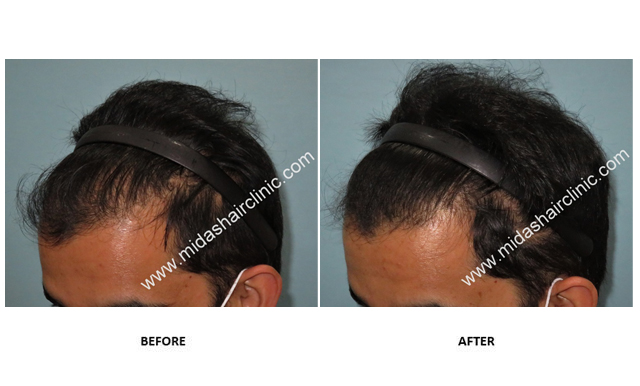
- Why does hair loss affect the frontal area and crown first?
Hair follicles in these areas are genetically more sensitive to DHT. Over time, they shrink faster than those in the donor area (back of the scalp), which is why these regions are most commonly affected.
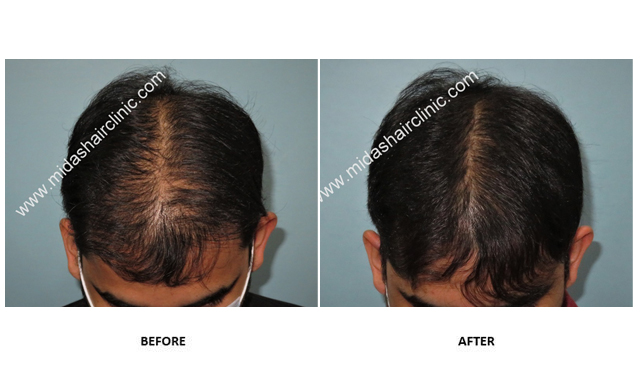
This is also why hair transplants use donor hair from the back of the scalp —because it is naturally resistant to genetic hair loss.
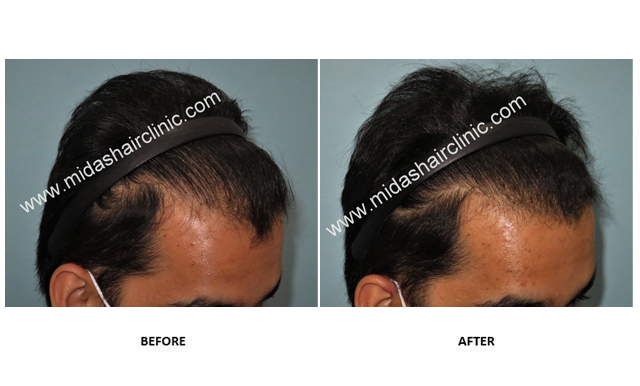
- Can medications alone maintain long-term hair density?
Medications like Minoxidil and Finasteride can slow down progressive hair loss and improve density, but they require consistent use.
At Midas Hair Clinic, patients are often advised a combination approach:
- Medication
- PRP, GFC, LLLT or supportive therapies
- Surgical options (if needed)
This ensures better long-term results rather than relying on a single solution.
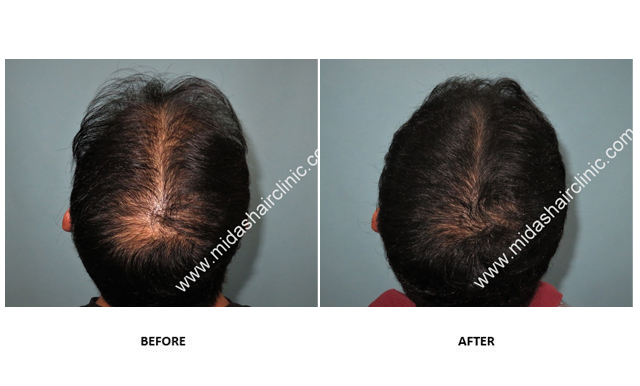
- Why do some men experience sudden heavy hair shedding?
Sudden shedding is often linked to Telogen Effluvium, triggered by stress, major prolonged illness, or nutritional deficiency.
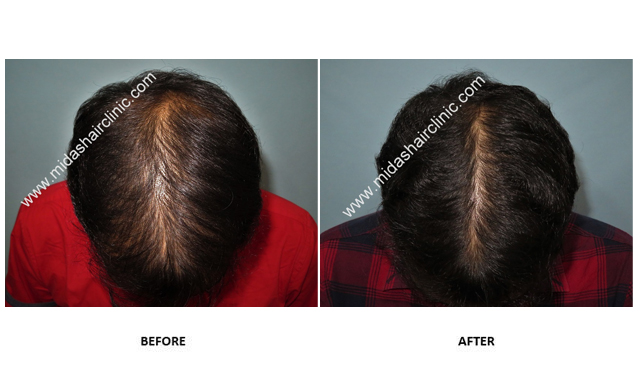
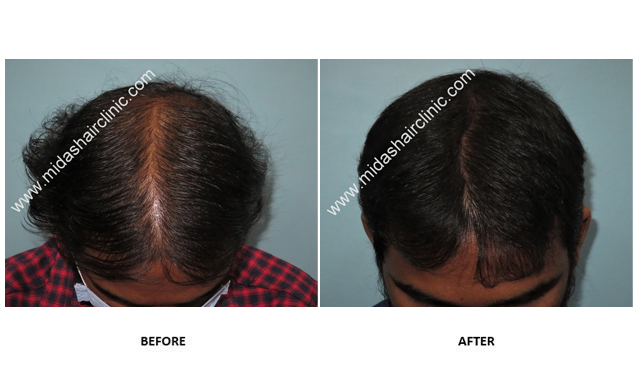
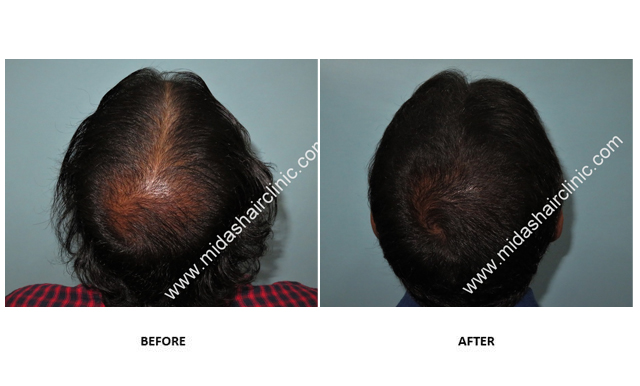
Unlike genetic baldness, this condition is usually temporary—but it can unmask underlying pattern baldness, making an early consultation important.
47 total views, 2 views today


